


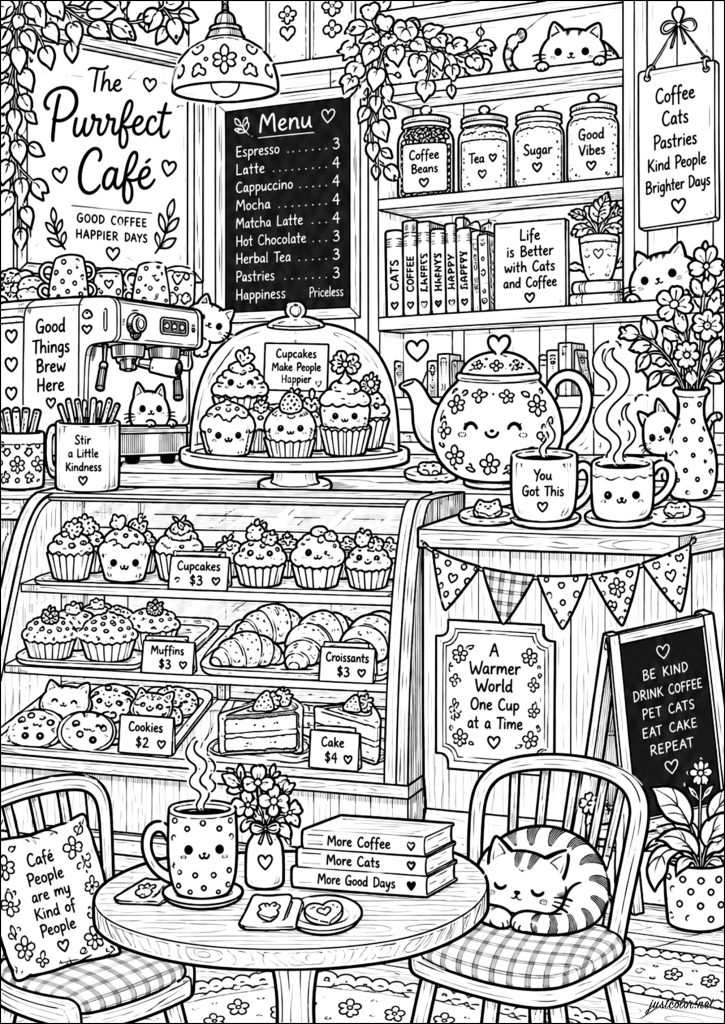
Little pink-cheeked animals, smiling clouds, big-eyed onigiri: kawaii has won over the whole planet. But behind these soft, gentle drawings lies a story nearly a thousand years old. Here’s what you need to know about “Japanese cute” before you reach for your pastel pencils.

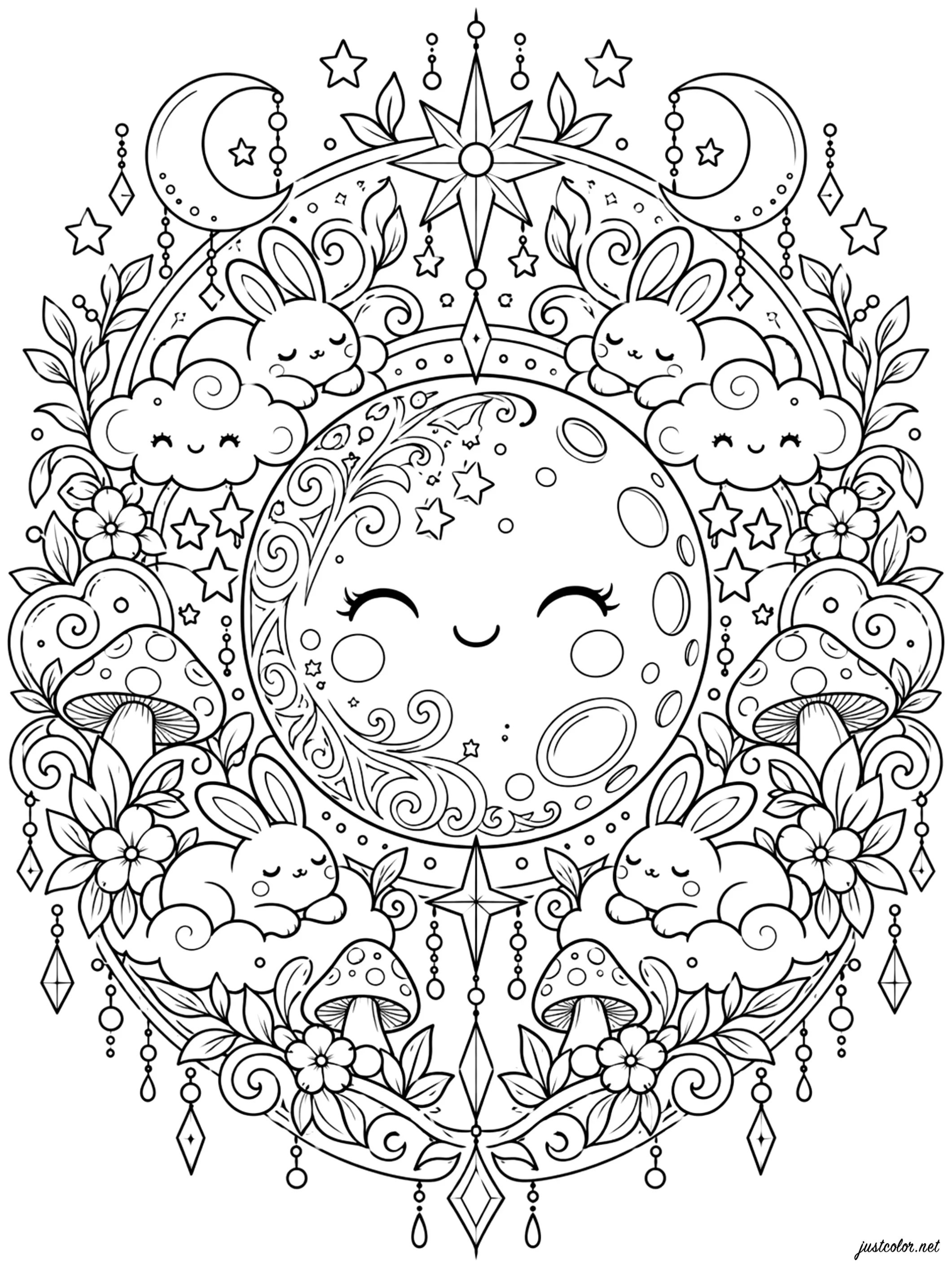
A word born in Japan a thousand years ago
The word kawaii appears as early as the 11th century. It comes from an old expression describing a face flushing red, from embarrassment or pity. At first, it expressed compassion for what is fragile and vulnerable.
Around the same time, the court lady Sei Shōnagon drew up a list of “endearing things” in her Pillow Book: a child’s face, a hopping sparrow, a tiny little object. The spirit of kawaii is already there.
Over the centuries, the meaning shifted. Pity gave way to a joyful fondness for everything endearing, small and cute. That’s the meaning we know today.
From netsuke to Yumeji: a real tradition
Kawaii is part of a long artistic tradition. From the 17th century onward, the Japanese wore netsuke. These are tiny figurines carved from wood or ivory, hung from the kimono’s sash to hold a pouch or a box, because kimonos have no pockets.
Many depict round, playful animals: puppies, rabbits, frogs, cats curled up into a ball. Small and smooth to the touch, they still fascinate collectors all over the world.
In 1914, illustrator Yumeji Takehisa (1884-1934) opened a shop in Tokyo’s Nihonbashi district. He sold postcards, writing paper and little fancy goods that he designed himself. His style blended Japanese aesthetics with Western Art Nouveau. His customers: young women. Many see it as the ancestor of today’s kawaii shops.
The 1970s: kawaii becomes a visual language
It was in the 1970s that kawaii really took off. Japanese high school girls adopted a perfectly round handwriting, decorated with hearts and stars. Manga for girls popularized heroines with huge eyes. In 1974, Hello Kitty was born, and went on to become the global icon of cuteness.
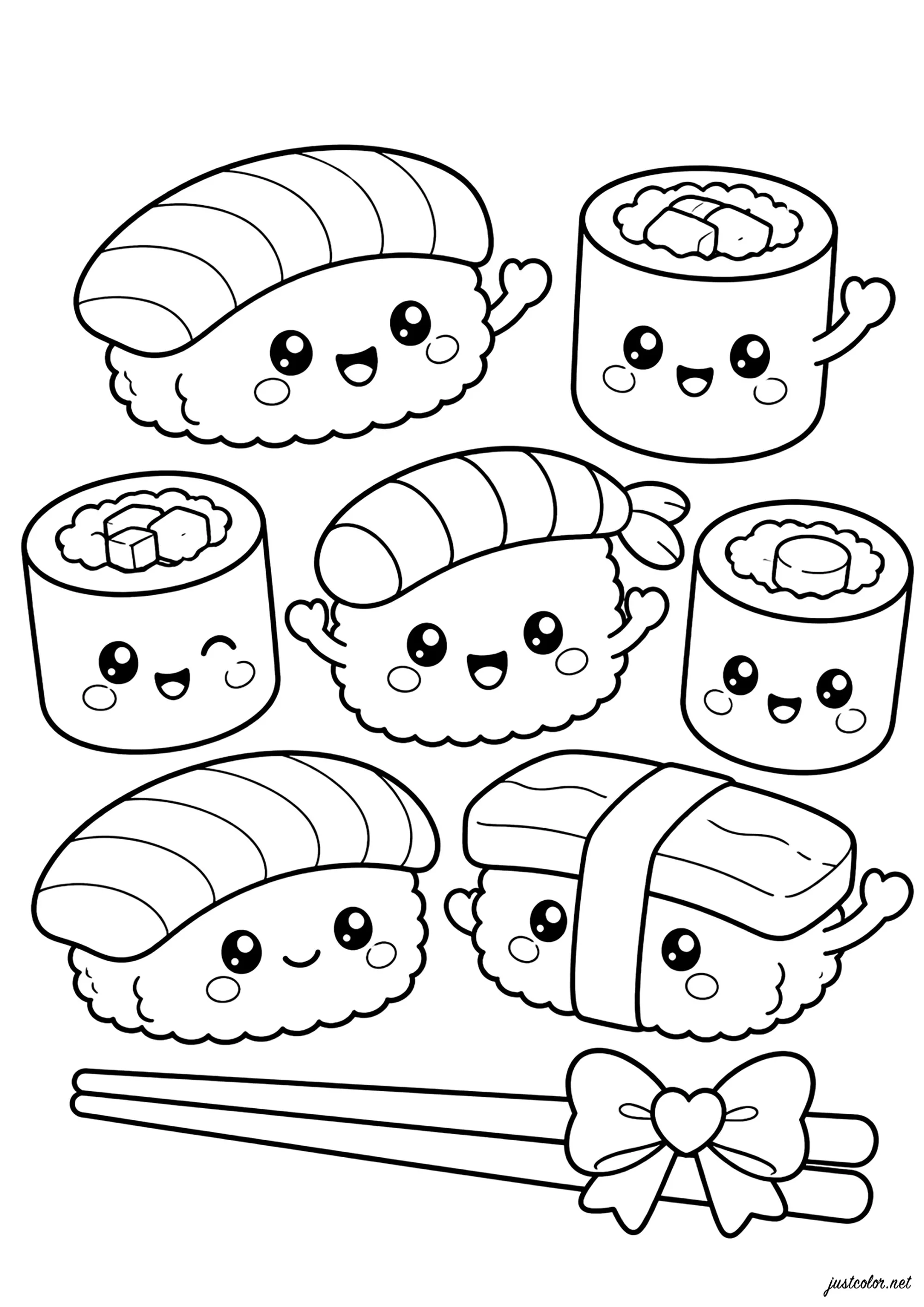
Kawaii then became a cultural, social and commercial phenomenon. Its visual codes are easy to recognize:
- rounded shapes, with no sharp angles
- a head out of proportion with the body
- big, shiny eyes
- soft, pastel colors
- characters inspired by humans, animals… or even objects and food
- often, a tiny mouth and pink cheeks

Today, kawaii is everywhere
In Japan, cute has taken over every corner of public life. You’ll find it in manga, figurines, fashion, advertising and packaging. Cities, prefectures, police stations and even some banks have their own round mascot. Kawaii even shows up in election campaigns and on construction site signs.
Why such success? Kawaii encourages a childlike, tender attitude that makes people seem more spontaneous, cheerful and approachable. It softens messages and creates an instant emotional bond. In 2009, Japan even appointed “kawaii ambassadors” to promote its pop culture abroad.
Contemporary artists have embraced it too. Takashi Murakami (born 1962) made it one of the pillars of his work, with his brightly colored smiling flowers exhibited in the world’s greatest museums.
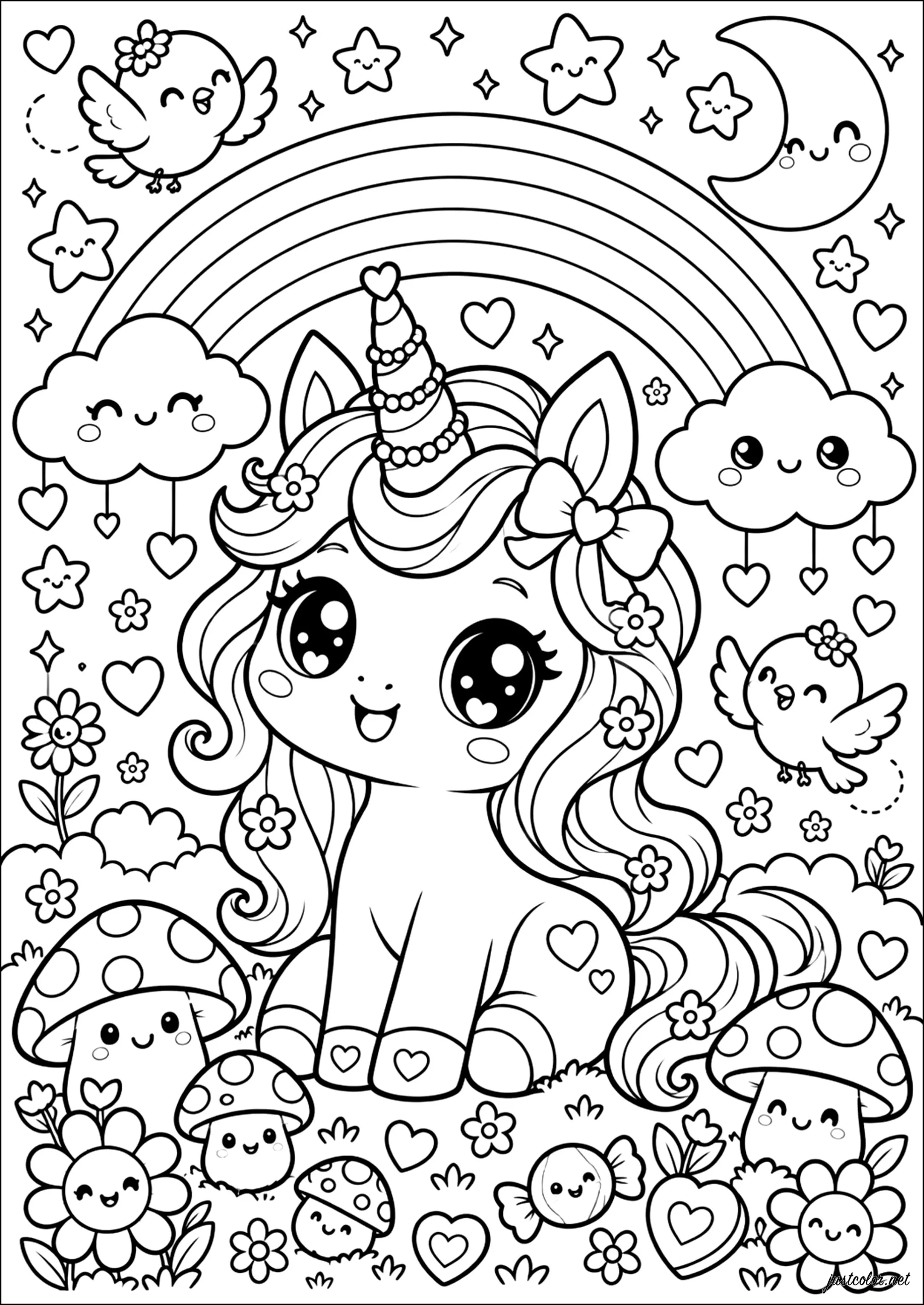
Kawaii has also given rise to variations: yume-kawaii, dreamy and pastel, with unicorns and rainbows; or kimo-kawaii, cute and a little bit creepy at the same time.

Why kawaii is perfect for coloring
Kawaii seems to have been invented for coloring. Its outlines are thick and clean, its shapes simple and round, its areas clearly defined. And the result is always cheerful, whatever palette you choose.
For kids, it’s an ideal theme from age 3 or 4. The large areas are easy to fill without going over the lines, and the characters are reassuring and funny: animals, smiling fruit, friendly little monsters.
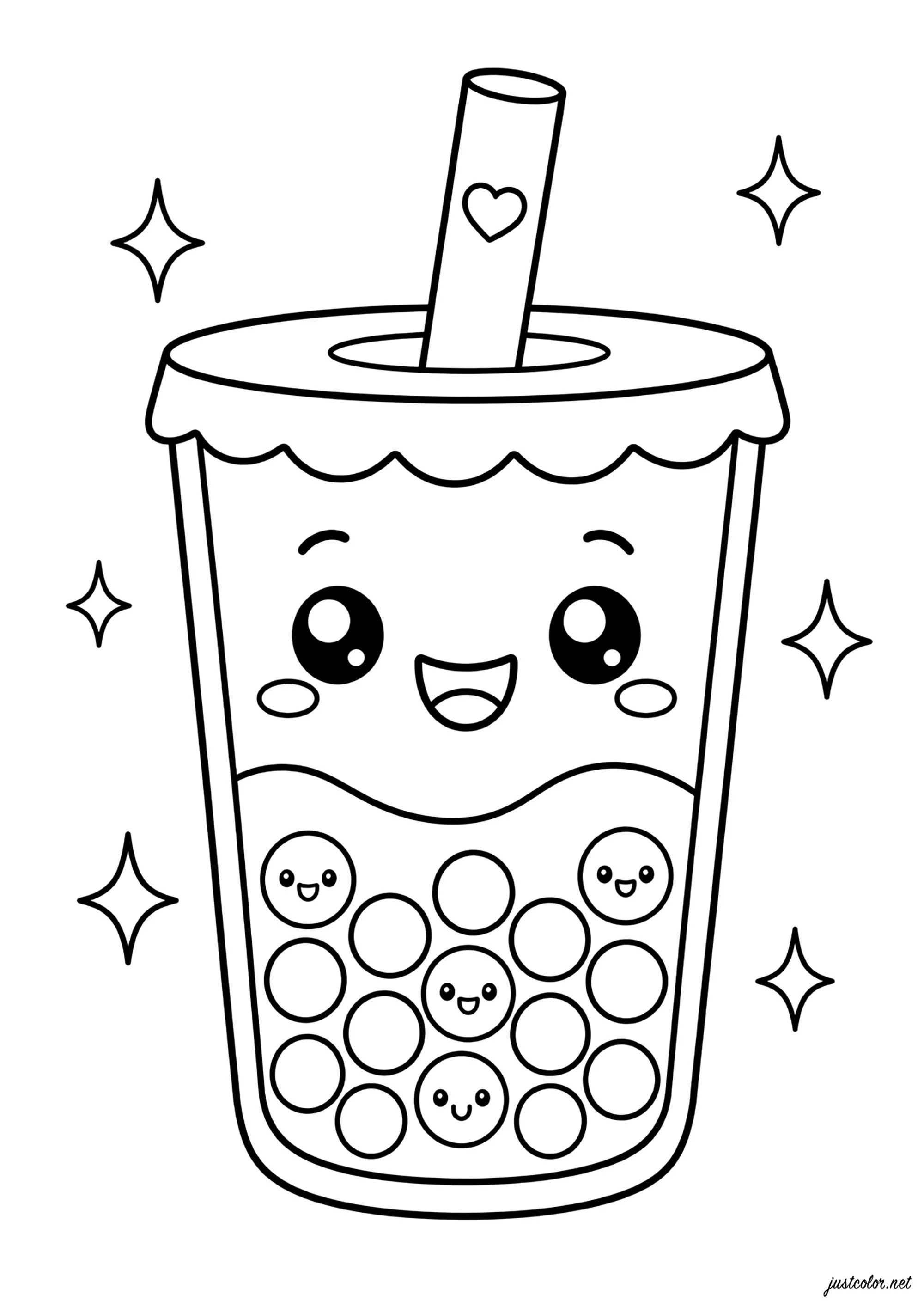
→ Discover our kawaii coloring pages for kids
For adults, kawaii comes in richer compositions: repeating patterns that fill the whole page, scenes packed with details, cute mandalas, Japanese food (sushi, bento, mochi, bubble tea). A truly relaxing moment, with that little touch of childhood pleasure that feels so good.
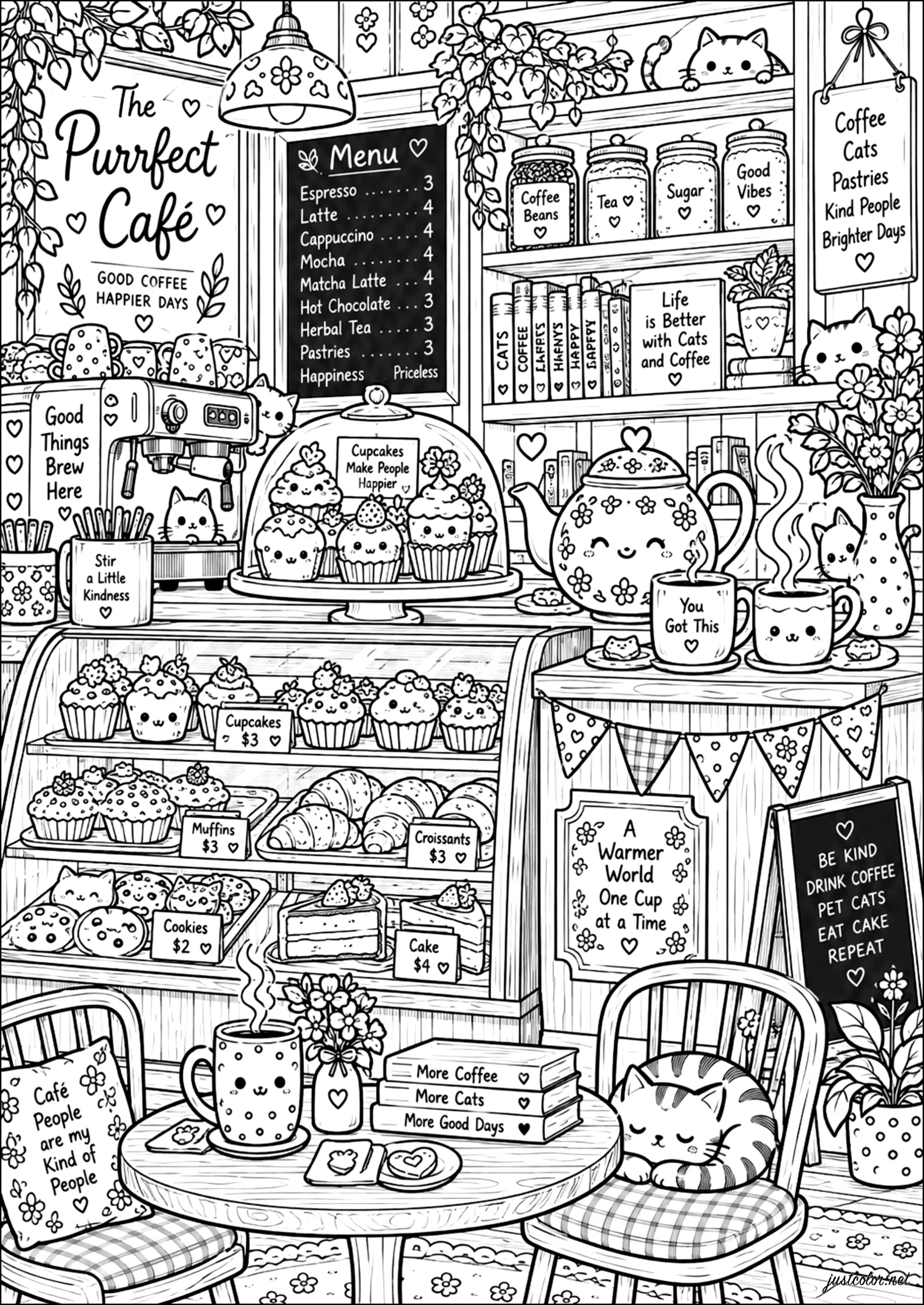
→ Discover our kawaii coloring pages for adults
5 tips for a truly kawaii coloring page
- Go pastel: powder pink, mint, lavender, butter yellow, sky blue. Three or four shades are enough for a harmonious page.
- Don’t forget the cheeks: two little pink ovals under the eyes, and the character comes to life.
- Keep a white dot in the eyes: this highlight gives the shiny look typical of kawaii.
- Add some decoration: stars, hearts, clouds or little dots around the character, drawn by yourself.
- Choose your tools: colored pencils for soft gradients, markers for bright flat colors, or a fine black felt-tip pen to go over the outlines at the end.
Frequently asked questions
What does kawaii mean?
Kawaii means “cute” or “adorable” in Japanese. The word describes anything that melts your heart: a baby animal, a small object, a big-eyed character.
What is the difference between kawaii and chibi?
Kawaii is a general aesthetic of cuteness. Chibi is a specific drawing style: a miniature character with a huge head and a tiny body. Chibi is therefore a form of kawaii.
Are kawaii coloring pages for kids or adults?
Both! The simple versions suit the youngest, while the detailed versions are perfect for adults looking for a relaxing coloring session.
{“@context”:”https://schema.org”,”@type”:”FAQPage”,”mainEntity”:[{“@type”:”Question”,”name”:”What does kawaii mean?”,”acceptedAnswer”:{“@type”:”Answer”,”text”:”Kawaii means “cute” or “adorable” in Japanese. The word describes anything that melts your heart: a baby animal, a small object, a big-eyed character.”}},{“@type”:”Question”,”name”:”What is the difference between kawaii and chibi?”,”acceptedAnswer”:{“@type”:”Answer”,”text”:”Kawaii is a general aesthetic of cuteness. Chibi is a specific drawing style: a miniature character with a huge head and a tiny body. Chibi is therefore a form of kawaii.”}},{“@type”:”Question”,”name”:”Are kawaii coloring pages for kids or adults?”,”acceptedAnswer”:{“@type”:”Answer”,”text”:”Both! The simple versions suit the youngest, while the detailed versions are perfect for adults looking for a relaxing coloring session.”}}]}